
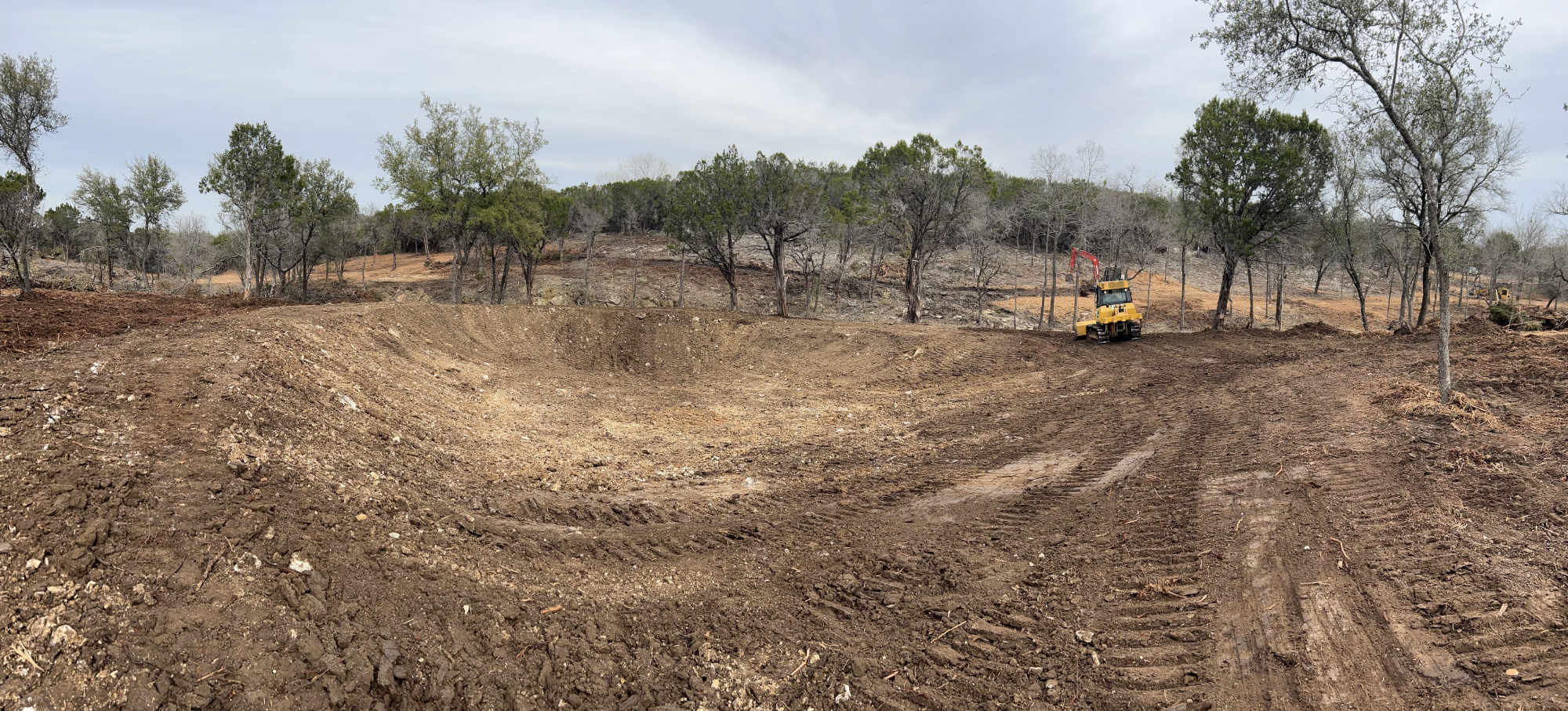
Land clearing in Hood County typically runs $1,400 to $2,800 per acre for light to moderate brush, and $2,800 to $5,500 or more per acre for heavy cedar or dense timber. Forestry mulching, the method that works best on Hood County’s rocky terrain, usually clears two to four acres a day. Here’s what actually drives that price, and what the process looks like from start to finish.
If you own acreage anywhere between Granbury and Tolar, you already know the problem. Cedar and mesquite don’t slow down. A pasture that looked manageable last spring can be a wall of brush by fall, and every season you wait adds cost and time to the job. At Olson Earthworks, we clear land across Hood County for a living, and the questions we hear on almost every site visit are the same: what will this cost, how long will it take, and which method actually makes sense for this property.
What Land Clearing Actually Involves
Land clearing is the removal of trees, brush, stumps, and dense vegetation to prepare a property for construction, agriculture, fencing, or better access. In North Texas, that mostly means dealing with two stubborn species: Ashe juniper, better known as cedar, and honey mesquite. Cedar dies once it’s cut or mulched. Mesquite doesn’t. It resprouts from the root crown unless that crown is physically removed, which is why the right method depends on what’s actually growing on your land, not just how much of it there is.
What Land Clearing Costs in Hood County
Pricing depends on three things: acreage, vegetation density, and species. For forestry mulching, the numbers generally break down like this:
- Light to moderate brush: $1,400–$2,800 per acre. This covers scattered cedar, grass, and smaller undergrowth.
- Heavy cedar or dense timber: $2,800–$5,500+ per acre. Thick stands and larger trunk diameters slow the mulcher down and increase machine time.
- Mesquite-heavy sites: Often priced higher, since mesquite typically needs excavator grubbing in addition to mulching to remove the root crown.
Pro Tip: Get your estimate in person, not over the phone. Density varies wildly across a single property, and a quote based on acreage alone almost always misses the mark once equipment is on-site.
Forestry Mulching vs. Traditional Bulldozing
Bulldozing pushes vegetation into piles that then have to be burned or hauled off, and burn permits have gotten harder to pull in a lot of Texas counties. Forestry mulching grinds everything in place in a single pass, leaving a mulch layer that suppresses regrowth and protects topsoil.
Did you know a mulcher on tracked equipment spreads machine weight evenly across the ground, which matters on Hood County’s shallow, rocky soil where a dozer can strip topsoil if it’s not handled carefully? For most residential and light commercial jobs here, mulching ends up being both the cheaper and the less disruptive option.
How Long Does It Take to Clear an Acre?
A forestry mulcher typically covers two to four acres a day on moderate brush. Dense cedar stands, heavy mesquite, or rough, rocky ground slow that pace down. A five-acre property with mixed brush might take two to three working days; the same acreage in heavy cedar could stretch closer to a week. Weather and access also play a role, since a wet spring can push equipment back weeks in low-lying areas near Lake Granbury.
The Land Clearing Process, Step by Step
- Site evaluation. We walk the property, identify what stays and what goes, and flag any heritage trees or utility lines before quoting anything.
- Equipment selection. Dense cedar and brush get a forestry mulcher on a compact track loader. Tap-rooted mesquite or heavy timber gets a dozer or excavator with a grubbing attachment.
- Clearing operations. Crews work the site methodically, typically covering two to four acres a day depending on density.
- Debris management. With mulching, material stays on-site as ground cover, so there’s no burn pile and no haul-off fee.
- Final walkthrough. You get a clean, open property with a mulch layer that suppresses regrowth and supports native grass coming back in.
A Grant Most Hood County Landowners Never Hear About
Here’s something most land clearing companies won’t mention because it doesn’t affect their bottom line either way: mechanical brush removal for wildfire fuel reduction can qualify for cost-share reimbursement through the Texas A&M Forest Service’s Mechanical Fuel Reduction Grant, which reimburses landowners for hiring a contractor to create defensible space or fuel breaks using a forestry mulcher or similar equipment. The program covers a specific list of Central Texas counties and opens for applications on a set annual window, so eligibility and timing matter.
Did you know this reimbursement can run up to $2,000 per acre for heavy equipment treatments? If you’re clearing brush near a structure anyway, it’s worth checking whether your county and property qualify before you book the work.
Do You Need a Permit to Clear Land in Hood County?
Do you need a permit to clear land in Hood County? For most rural or unincorporated properties, no permit is required for land clearing alone. If your property sits inside Granbury city limits, in a flood zone, or involves clearing near a waterway, local drainage or tree ordinances may apply. We walk through what’s relevant to your specific site during the free estimate, since this varies block by block in some areas.
Choosing the Right Method for Your Property
The honest answer is that most Hood County properties don’t need a full clear-cut. A lot of landowners assume “clearing” means removing everything down to bare dirt, but selective clearing, protecting mature live oaks and pecans while removing invasive cedar, often gets a property to a usable, attractive state for less money and with less environmental impact. Our land clearing services team assesses vegetation type before recommending a method, because the wrong equipment on the wrong species either costs you more or leaves regrowth you’ll be dealing with again in two years.
If your project involves grading or drainage work once the land is cleared, it’s worth planning that phase early. Our excavation and site prep services team can pick up right where clearing leaves off, which keeps you from bringing in a second contractor and re-explaining the site from scratch.
For more detail on identifying and managing the specific brush species common to this part of Texas, Texas A&M AgriLife Extension’s Brush Busters program covers management approaches for mesquite, cedar, and other encroaching species found across Central Texas rangeland.
Frequently Asked Questions
How much does land clearing cost per acre in Hood County? Expect $1,400–$2,800 per acre for light to moderate brush and $2,800–$5,500+ per acre for heavy cedar or timber. Mesquite-heavy sites often run higher due to the added grubbing work required.
Is forestry mulching cheaper than bulldozing? Yes, in most cases. Mulching skips the hauling, burn permits, and pile management that traditional dozer clearing requires, and it causes less topsoil disturbance on Hood County’s shallow, rocky ground.
How many acres can a forestry mulcher clear in a day? A forestry mulcher typically covers two to four acres per day on moderate brush. Dense cedar, heavy mesquite, or rocky terrain slow that pace considerably.
Do I need a permit to clear land in Granbury or Hood County? Most rural, unincorporated properties don’t require a permit for land clearing alone. Properties inside city limits, flood zones, or near waterways may have additional local requirements to check first.
What’s the difference between land clearing and land grading? Land clearing removes vegetation, brush, and stumps from a property. Grading reshapes the finished surface for drainage and building elevations, and usually happens after clearing is complete as part of site preparation.
Ready to Clear Your Property?
Land clearing costs in Hood County come down to three variables: how much acreage you’re working with, what’s actually growing on it, and which method fits that vegetation. Forestry mulching handles most cedar and brush situations efficiently and without the burn piles or haul-off costs that come with traditional clearing, while mesquite-heavy sites usually need a combination approach.
The only way to get an accurate number for your property is a site visit. Schedule a free on-site estimate with our team, and we’ll walk the property with you and give you a straight answer on cost, timeline, and method before any equipment moves.