
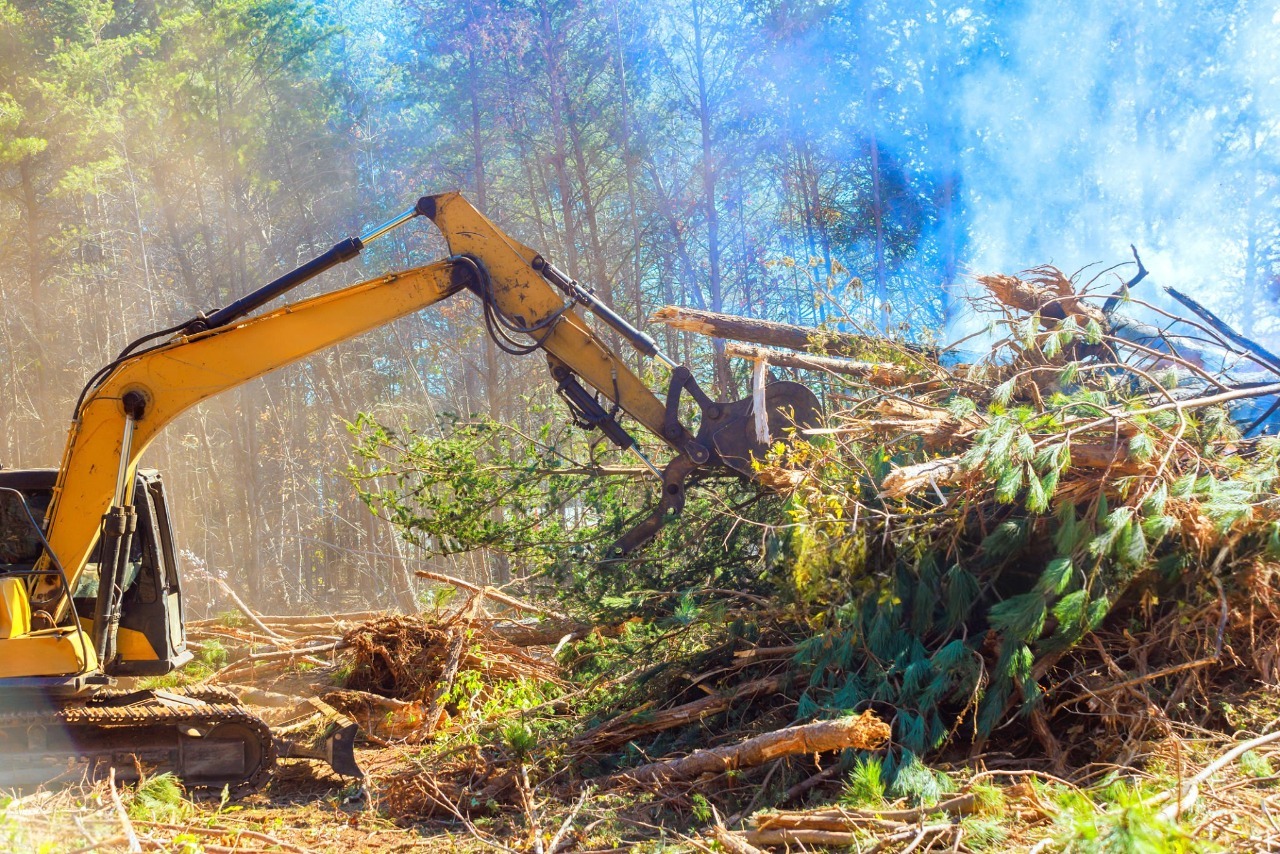
Clearing land with an excavator means using a tracked machine with a thumb, grapple, or root rake to pull vegetation out by the roots instead of shredding it at the surface. On Hood County properties, winter is when we reach for the excavator first, because dormant mesquite and leaf-off brush make root removal faster and cleaner than any other time of year.
That runs against what most people expect. Forestry mulching gets all the attention, and for good reason. But there’s a stretch from late November through February when we’ll park the mulching head and roll the excavator off the trailer instead. Here’s the thinking behind that call, and when it applies to your property.
What an Excavator Actually Does on a Land Clearing Job
An excavator doesn’t cut brush. It removes it. That distinction drives everything else about how the machine gets used.
Grubbing vs. Cutting
Grubbing means extracting the entire plant, root ball included. A mulcher shreds what’s above the dirt line and leaves the root system intact underground. For shallow-rooted species like Ashe juniper, that’s fine. Cedar doesn’t resprout from a cut stump.
Mesquite is a different animal. It stores energy in a bud zone just below the soil surface, and cutting it at ground level is closer to pruning than killing. Cut a mesquite in March and you’ll have three trunks where one stood by August. Texas A&M AgriLife’s Brush Busters program has documented this regrowth pattern for decades across Texas rangeland. An excavator with a grubbing bucket lifts the whole bud zone out of the ground in one motion.
The Attachments That Matter
Most of our winter clearing runs on three setups. A hydraulic thumb turns the bucket into a grabber for moving whole trees and stacking brush piles. A root rake combs through topsoil and pulls buried roots and rock without scooping out good dirt. A grubbing bucket with reinforced teeth handles the actual extraction on tap-rooted species.
The machine size matters as much as the attachment. A mid-size excavator on wide tracks spreads weight across more surface area, which becomes the deciding factor once the ground softens up.
Did You Know? A mesquite tap root can reach 50 feet deep looking for water, but the part that regenerates the plant sits in the top 6 to 12 inches of soil. You don’t need to chase the root down — you need to remove the crown.
Why Winter Changes the Equipment Choice in Hood County
Three things shift between November and February that make excavator work more effective here.
Leaf-Off Visibility
Once the mesquite and hardwoods drop their leaves, you can see the actual structure of a property. Fence lines appear. Old cisterns, buried tire piles, abandoned well casings, and the previous owner’s dump spot all become visible from the cab. We’ve found things on leaf-off walkthroughs in January that would have been invisible under summer canopy and would have cost a client a broken hydraulic line to discover the hard way.
Better visibility also means a more accurate bid. When we can see the terrain, the estimate we hand you matches the invoice.
Dormant Season Removal
Winter is when woody brush pulls its energy reserves into the root system. That doesn’t make removal easier mechanically, but it does mean anything we miss has a shorter window to recover before spring. Root fragments left in cold soil sit idle for months instead of sprouting within weeks.
There’s a side benefit that Central Texas property owners feel every January. The Texas A&M Forest Service reports that mountain cedar pollen production begins in mid-December and peaks in mid-January. Clearing a heavy cedar stand before Christmas won’t fix regional pollen, but it does take the closest source off your own fence line.
Wet Clay — And the Days We Say No
This is the part nobody advertises. Hood County soils run heavy to clay, and winter rain sits in them. A loaded excavator on saturated clay doesn’t just rut a pasture, it compacts the subsoil in a way that takes years to recover and ruins drainage on the very ground you’re trying to improve.
So we reschedule. If a property has taken two inches in the past 72 hours and it hasn’t drained, we push the start date rather than tear up the site. Clients occasionally push back on that, and we hold the line anyway. Repairing compaction damage costs more than waiting a week.
Pro Tip: Ask any contractor bidding your winter job what their wet-ground policy is. A firm answer is a good sign. “We’ll work through it” usually means you’re paying for reclamation work in the spring.
Excavator vs. Forestry Mulcher in Winter
| Factor | Excavator | Forestry Mulcher |
| Removes roots | Yes, full extraction | No, surface cut only |
| Best for | Mesquite, stumps, building pads | Cedar, light brush, trails |
| Winter ground pressure | Higher, needs drier conditions | Lower, handles damp soil better |
| Leaves usable material | Brush piles or haul-off | Mulch layer on site |
| Follow-up needed | Grading and cleanup | Minimal |
Neither machine is better. They solve different problems. We often run both on the same property: mulcher through the cedar, excavator on the mesquite flats and anywhere a foundation is going. If you’re weighing methods against budget and timeline, our complete guide to land clearing blog breaks down the full comparison.
How a Winter Excavator Job Runs, Start to Finish
- Walk the property with you. Leaf-off means we can actually see what we’re bidding. We mark keeper trees, utilities, and problem areas together.
- Confirm ground conditions. We check recent rainfall and probe the soil. This is a go or no-go decision, not a formality.
- Grub and stack. The excavator extracts root balls and stacks material in piles positioned for whatever disposal method you’ve chosen.
- Handle the debris. Haul-off, on-site chipping, or burning if conditions allow. Hood County sits outside the DFW nonattainment area, so state rules generally permit burning land clearing debris. But the Texas A&M Forest Service notes that county judges can issue burn bans that override standard burning allowances, so we check ban status with the fire marshal before anything gets lit.
- Rough grade the disturbed ground. Grubbing leaves holes. We backfill and smooth so the site drains correctly and you’re not looking at a minefield in March.
That last step is clearing hands off to excavation and site prep work. If a build is coming, it’s worth combining the two into one mobilization instead of paying to bring equipment out twice.
Did You Know? Winter clearing schedules open up in Central Texas because most residential construction slows down. Booking a January clearing date is usually easier than booking one in April, and pricing tends to follow demand.
Ready to Clear Before Spring?
Winter gives you a window most property owners overlook. Leaf-off visibility produces better bids, dormant mesquite comes out cleaner, and a site cleared in January is graded and settled by the time spring construction picks up. The excavator earns its keep in those months in a way it doesn’t in July.
If you’ve got mesquite flats, a future building pad, or overgrowth you’ve been putting off, now is the time to get it on the calendar. Olson Earthworks handles land clearing across Hood County and the surrounding area, including properties around Granbury, Tolar, Lipan, and Weatherford. Call for a free on-site estimate and we’ll walk the property with you while you can still see the ground.
Frequently Asked Questions
Can you clear land with an excavator in winter?
Yes, and winter is often the best season for it in Central Texas. Leaf-off conditions improve visibility and dormant brush removes more cleanly. The main limit is wet clay soil, which requires waiting for the ground to drain.
Is an excavator better than a mulcher for clearing land?
An excavator is better when you need roots removed, such as mesquite control or building pad prep. A mulcher is better for cedar, light brush, and keeping organic material on site. Many properties need both machines.
Will mesquite grow back after excavator clearing?
Not if the root crown is fully extracted. Excavator grubbing removes the bud zone below the soil surface where mesquite regenerates, unlike cutting or mulching, which leaves that zone intact and usually triggers multi-stem regrowth.
How much does excavator land clearing cost per acre?
Most Hood County properties fall between $2,000 and $6,000 per acre, depending on brush density, tree size, terrain, and debris disposal method. Heavy mesquite with full root removal sits at the upper end. On-site estimates are free.
Does winter rain delay land clearing projects?
It can. Saturated clay soil risks rutting and subsoil compaction, so reputable contractors reschedule rather than work through it. Most winter delays run three to seven days, since Central Texas soils drain faster than northern clay.